Video Management System (VMS): The Brain Behind Modern CCTV
October 14, 2026
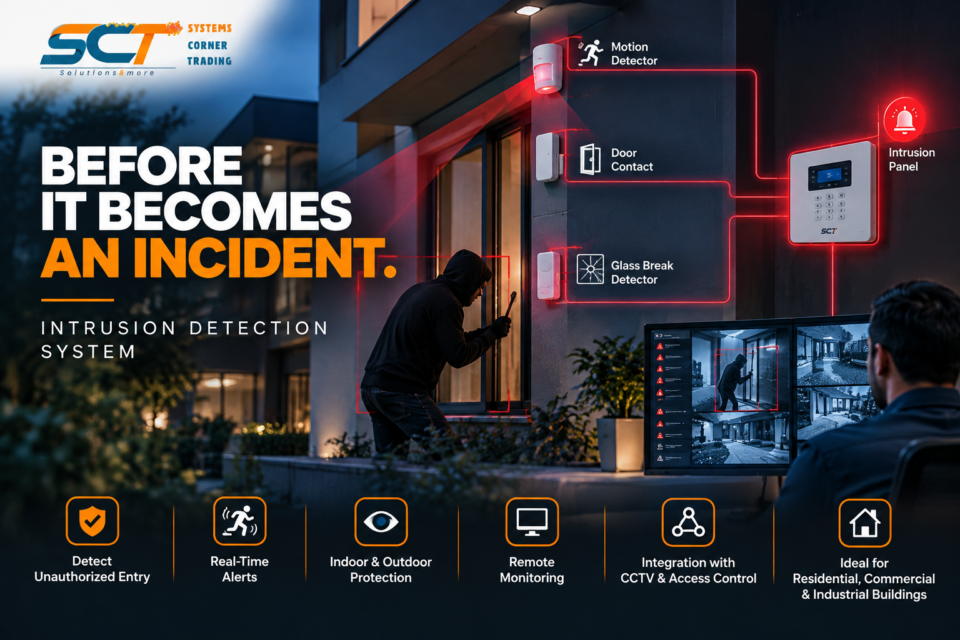
Intrusion Detection System: How Buildings Detect Threats Before They Escalate
October 28, 2026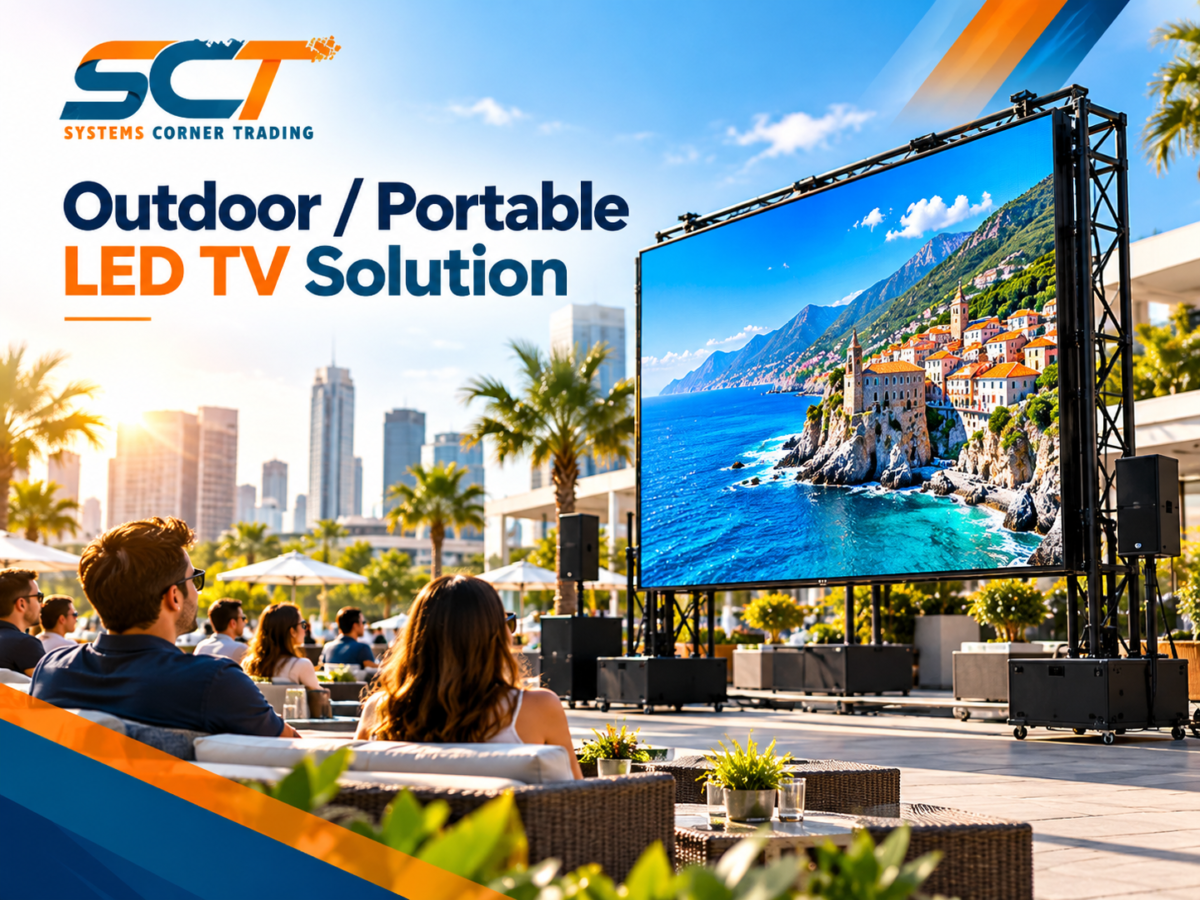
The Sun Is Your Biggest Competitor
Take a normal indoor screen outside at midday.
The content is still running.
The resolution has not changed.
The video file is exactly the same.
But suddenly, the picture looks weak, reflections become distracting, and the screen is difficult to see.
The problem is not the content.
The environment has changed.
Outdoor displays have to deal with challenges that indoor screens were never designed for — strong sunlight, heat, weather, longer viewing distances, and constantly changing light conditions.
That is why an Outdoor LED Display is much more than simply a bigger screen.
What Is an Outdoor LED Display?
An Outdoor LED Display is a high-brightness digital screen designed specifically for outdoor environments.
Depending on the project, these displays can be used for:
- Outdoor events
- Hotels and resorts
- Commercial areas
- Restaurants and cafés
- Public spaces
- Sports venues
- Exhibitions
- Corporate events
- Entertainment areas
- Advertising and digital signage
The objective is simple:
Deliver clear, visible content even when the environment is working against the screen.
1. Brightness Changes Everything
Indoors, lighting conditions are relatively controlled.
Outdoors, the screen may be competing directly with sunlight.
That means brightness becomes one of the most important design considerations.
An outdoor display must be bright enough for content to remain visible during the day, while still providing comfortable viewing as lighting conditions change.
But choosing a display is not simply about selecting the highest brightness available.
The correct level depends on:
Location → Orientation → Ambient Light → Viewing Conditions → Operating Hours
More brightness is not automatically better.
The right brightness is better.
2. Pixel Pitch Is About Viewing Distance
A common mistake is thinking that the smallest pixel pitch is always the best choice.
It isn’t.
Pixel pitch describes the distance between LED pixels and directly affects image detail and recommended viewing distance.
If viewers will stand close to the screen, a finer pixel pitch may be required.
If the screen will be viewed from much farther away, a different configuration may provide the required visual quality more efficiently.
So instead of asking:
“What is the highest-resolution screen?”
the better question is:
“How far away will the audience be?”
Screen size and pixel pitch should always be considered together.
3. Outdoor Means More Than Bright
An outdoor screen has to survive an environment that an indoor display usually does not face.
Depending on the installation, designers need to consider:
- Dust
- Rain
- Humidity
- High temperature
- Direct sunlight
- Temperature variation
- Wind exposure
- Ventilation and cooling
That means enclosure design, thermal management and environmental protection are critical parts of the system.
Putting an indoor display outside does not make it an outdoor display.
The complete solution has to be designed for the environment.
4. Day and Night Are Two Different Viewing Conditions
Outdoor displays may operate from morning until late at night.
At midday, the system may need enough brightness to compete with strong ambient light.
At night, that same brightness could be excessive.
That is why brightness management becomes important.
The display should provide visibility without creating unnecessary glare or uncomfortable viewing conditions.
A well-designed outdoor display solution should adapt to the space around it — not fight against it.
5. The Screen Is Only Part of the Experience
For many outdoor applications, visual content alone is not enough.
Events, hospitality spaces and entertainment areas may also require:
- Loudspeakers
- Subwoofers
- Amplification
- Audio processing
- DSP
- Content sources
- Media players
- Control systems
This means an Outdoor LED project can become a complete Audio / Visual experience, rather than simply a screen installation.
Great visuals attract attention.
Great AV creates an experience.
Fixed or Portable?
Not every project needs a permanently installed LED screen.
A Fixed Outdoor LED Display may be suitable for locations where the screen is part of the permanent infrastructure.
Examples include:
- Hotels
- Shopping areas
- Building façades
- Entertainment zones
- Sports facilities
A Portable LED Solution may be more suitable for:
- Events
- Temporary installations
- Exhibitions
- Corporate gatherings
- Seasonal activities
- Flexible hospitality spaces
The correct approach depends on how often the screen will move, where it will be used, and how quickly it needs to be deployed.
What Actually Makes an Outdoor Screen “Outdoor”?
Before selecting an Outdoor LED Display, several questions should be answered.
How bright is the installation area?
What is the expected viewing distance?
What screen size is required?
Which pixel pitch is appropriate?
Will the screen operate during daytime?
What weather conditions will it face?
How will heat be managed?
Is the installation fixed or portable?
Is audio required?
Where will the content come from?
How will the system be controlled?
These questions should be answered before choosing the equipment.
Because the best screen is not necessarily the biggest, brightest or highest-resolution option.
It is the screen designed for the actual environment.
Indoor vs Outdoor LED Displays
The difference goes far beyond location.
Indoor Display
Controlled lighting
Shorter viewing distances
Protected environment
Lower environmental exposure
Outdoor LED Display
High ambient light
Potential direct sunlight
Longer viewing distances
Weather exposure
Temperature variation
Higher environmental demands
The application determines the technology.
The Sun Is Your Biggest Competitor
When designing an indoor AV system, engineers can control much of the environment.
Outside, they cannot control the sun.
They cannot stop temperature changes.
They cannot eliminate rain, dust or changing viewing conditions.
Instead, the system has to be engineered around them.
That is what separates a normal screen from a properly designed Outdoor LED Display solution.
Outdoors, your screen is not competing with another display.
It is competing with the environment.
And that changes everything.
Bright Content. Anywhere.
At Systems Corner Trading (SCT), we provide Outdoor and Portable LED solutions designed for modern commercial, hospitality, entertainment and event environments.
Our solutions can support:
✔ Outdoor LED Displays
✔ Portable LED Screens
✔ High-Brightness Applications
✔ Fixed & Temporary Installations
✔ Audio Integration
✔ Amplification & DSP
✔ Content Sources
✔ Control & Configuration
✔ Complete AV Integration
From permanent outdoor installations to flexible event solutions, our goal is to deliver clear, engaging visual experiences designed around the environment.
Bigger Is Not Enough.
Brighter Is Not Enough.
It Has to Be Designed Right.
Systems Corner Trading (SCT)
Solutions & More
📞 +966 11 269 4437
📱 +966 51 146 4924
📧 info@systems-corner.com
🌐 www.systems-corner.com