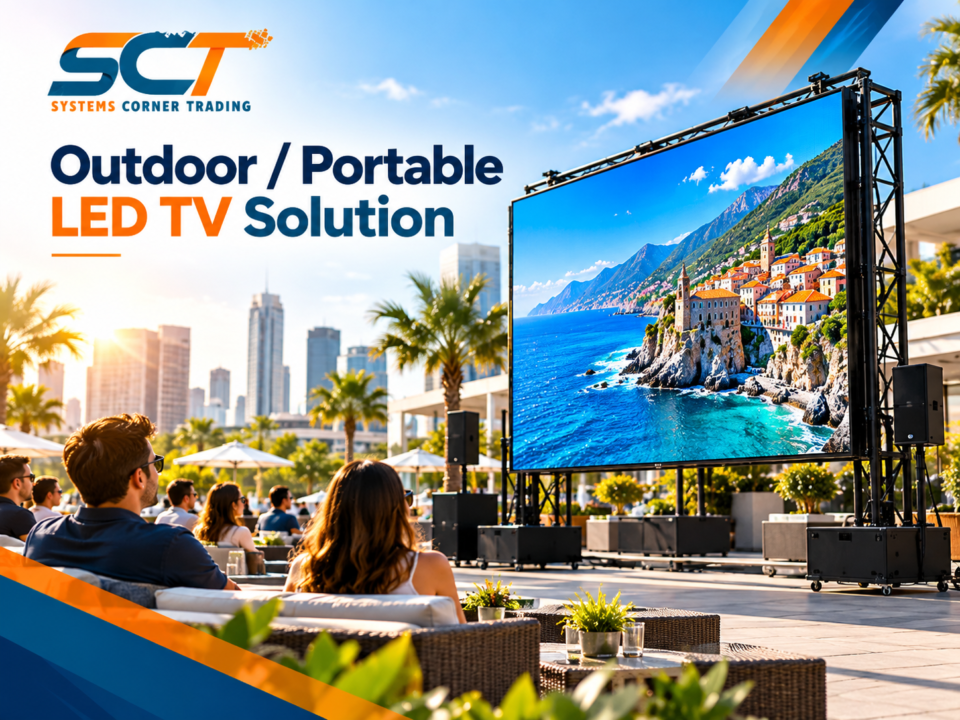

Outdoor LED Displays: What Makes Them Different from Indoor Screens?
October 21, 2026
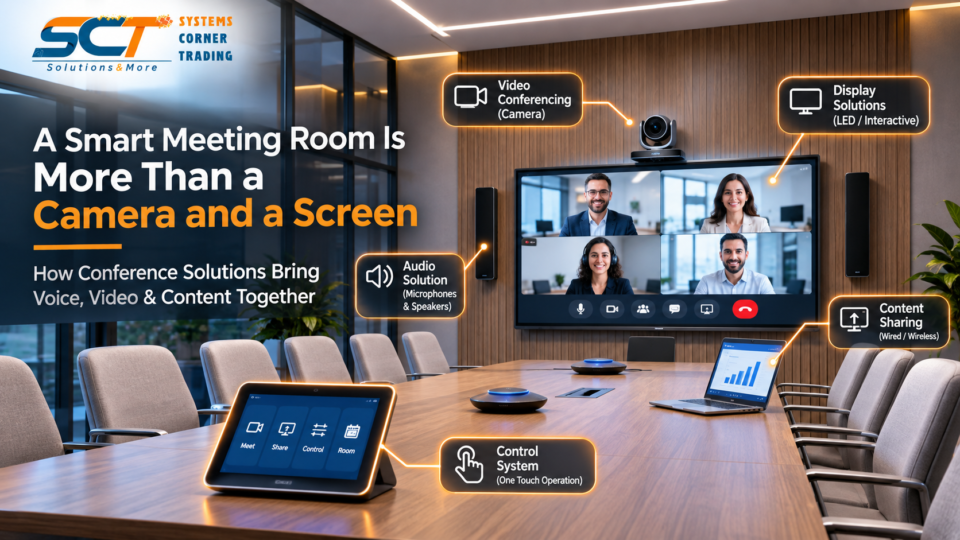
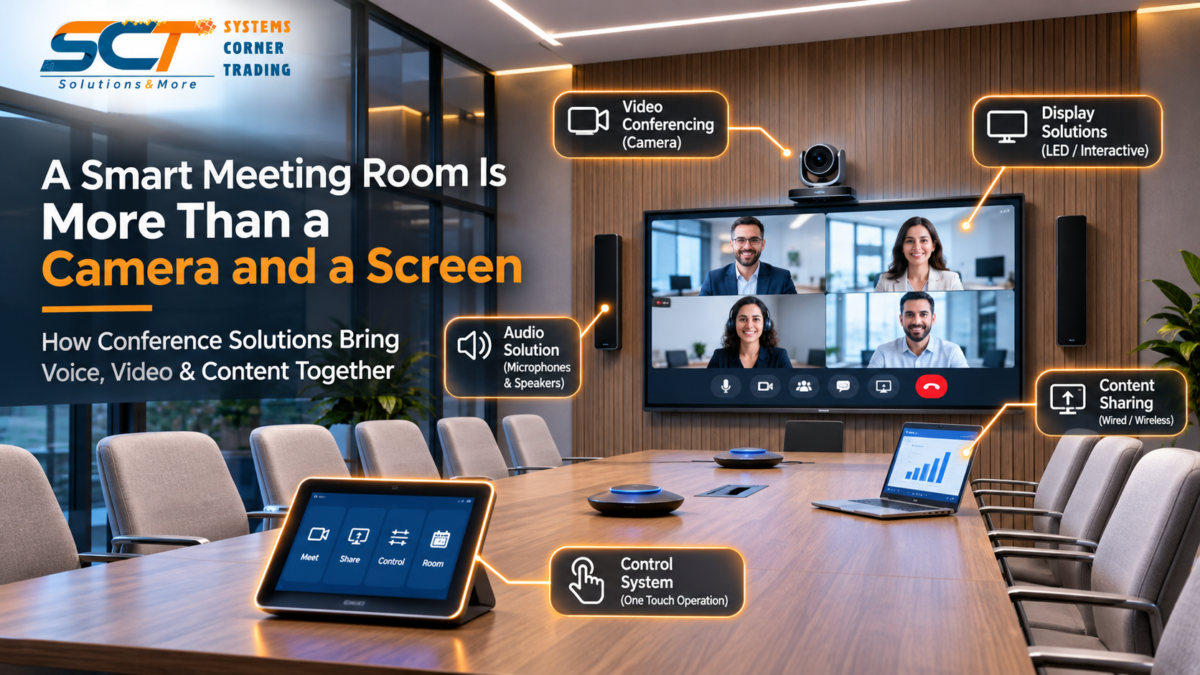
Conference Room Solutions: What Makes a Meeting Room Truly Smart?
November 4, 2026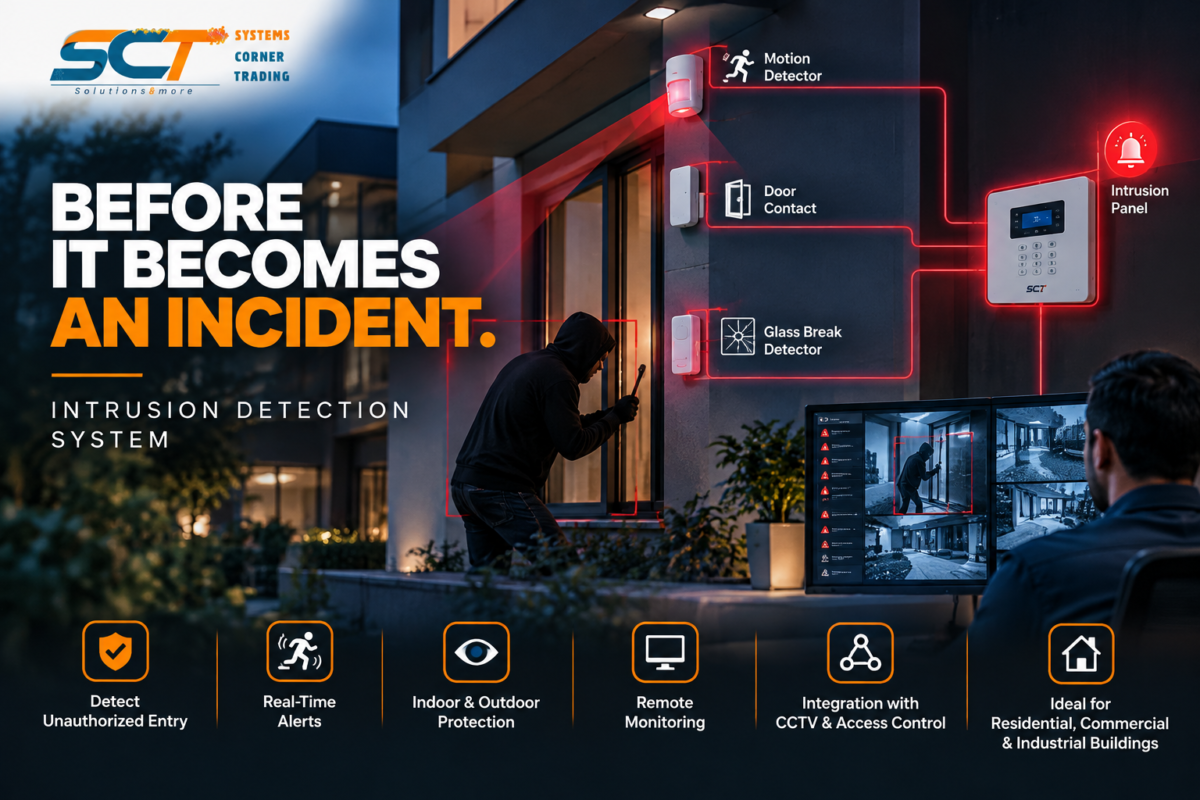
Before It Becomes an Incident.
The building is quiet.
The offices are closed.
The lights are off.
Everyone has gone home.
Then, at 2:17 AM, a protected door opens.
Seconds later, movement is detected inside a restricted area.
Nobody is watching that hallway at that exact moment.
But the building knows something is wrong.
That is the role of an Intrusion Detection System.
An Intrusion Detection System is designed to identify suspicious or unauthorized activity as it happens — helping security teams react before a situation develops into a larger incident.
At Systems Corner Trading (SCT), intrusion security forms part of a wider physical-security strategy focused on protecting people, property, equipment and facilities from unauthorized access and security threats.
What Is an Intrusion Detection System?
An Intrusion Detection System is a security solution that monitors protected areas and generates an alarm or event when specific security conditions are detected.
The concept is simple:
Detect
↓
Verify
↓
Alert
↓
Respond
Instead of relying only on someone continuously watching cameras, sensors monitor selected doors, windows, rooms and restricted areas.
If something unusual happens, the system can immediately bring the event to the attention of the security team.
The Door Opens When It Shouldn’t
One of the simplest intrusion events starts with a door.
A Door Contact can monitor whether a protected door or window is open or closed.
During business hours, opening that door may be completely normal.
But after the security system has been armed, the same event can become significant.
Door Opened
↓
Security Zone Triggered
↓
Intrusion Panel Receives Event
↓
Alarm / Notification Generated
The important point is not simply that the door opened.
It opened when it was not supposed to.
That context is what turns an ordinary event into a security event.
Someone Moves Where Nobody Should Be
Not every intrusion begins at a door.
Someone may enter through another route or move inside an area that should be empty.
A Motion Detector can help monitor movement within selected spaces.
This can be useful in areas such as:
- Offices after working hours
- Warehouses
- Equipment rooms
- Storage areas
- Restricted corridors
- Commercial facilities
- Technical rooms
- Residential properties
The detector does not need to understand who the person is.
Its first job is simpler:
“Movement has been detected in an armed area.”
From there, the security system can generate the required response.
When Glass Breaks
Windows are another possible point of entry.
Depending on the project and detector technology, Glass Break Detection can be used as another layer of intrusion protection.
Instead of relying on a single type of sensor, a properly designed system may use different devices for different risks.
For example:
Door Contact → monitors opening.
Motion Detector → monitors movement.
Glass Break Detector → monitors a specific type of window-related event.
Together, these devices help create layers of protection around the facility.
The Intrusion Panel: Where the Signals Come Together
Sensors alone do not create a complete intrusion system.
The Intrusion Alarm Panel acts as the central point that receives information from the connected detection devices.
It can organize the facility into zones, process alarm conditions and trigger the configured response.
Think of the architecture like this:
Detection Devices
Door Contacts
Motion Detectors
Glass Break Detectors
Other compatible security inputs
↓
Intrusion Panel
↓
Alarm / Event
↓
Security Operator / Monitoring Platform
↓
Response
The panel turns individual sensor signals into manageable security information.
Not Every Alarm Means the Same Thing
A large building may contain dozens of protected areas.
An event from the main entrance is not necessarily handled in the same way as an event inside a server room.
That is why intrusion systems are typically organized into zones or areas.
For example:
Zone 01 — Main Entrance
Zone 02 — Administration
Zone 03 — Warehouse
Zone 04 — Server Room
Zone 05 — External Perimeter
When an alarm occurs, operators need more information than:
“Something happened.”
They need to know:
Where?
When?
Which device?
Which protected area?
Good security is about turning alarms into information that can be acted on.
CCTV Records. Intrusion Detection Reacts.
CCTV and Intrusion Detection are closely related — but they do different jobs.
A camera can provide visual evidence.
An intrusion system can generate an immediate security event.
CCTV
See → Monitor → Record → Review
Intrusion Detection
Detect → Alert → Respond
The strongest approach is often to allow the two systems to support each other.
Imagine this sequence:
Motion Detected in Warehouse
↓
Intrusion Alarm Generated
↓
Associated CCTV Camera Displayed
↓
Operator Verifies the Situation
↓
Appropriate Security Response
Now the security team does not have to search through dozens of cameras trying to understand where the problem is.
Intrusion Detection tells them where to look.
CCTV shows them what is happening.
This type of relationship between intrusion events and video monitoring is also reflected in SCT’s VMS approach, where intrusion alarms can be associated with camera views for visual verification.
Access Control and Intrusion Detection Are Not the Same
These two systems are sometimes confused.
But their roles are different.
Access Control
Manages authorized access.
It answers:
“Who is allowed to enter?”
Cards, mobile credentials, PINs or other authentication methods can be used to control access to protected doors.
Intrusion Detection
Monitors unauthorized or abnormal activity.
It answers:
“Is something happening that should not be happening?”
For example:
A door being forced open.
Movement inside an armed room.
Activity inside a protected area outside permitted hours.
Access Control manages permission.
Intrusion Detection watches for violations.
When integrated properly, both systems can contribute to a stronger security environment.
Security Doesn’t End at the Building Entrance
Traditional security sometimes focuses only on the main entrance.
But threats can occur in many different locations.
A facility may need protection for:
- Perimeter areas
- External doors
- Windows
- Warehouses
- Storage rooms
- Server and IT rooms
- Electrical rooms
- Executive areas
- Cash-handling locations
- Equipment rooms
- Restricted technical spaces
That is why intrusion protection should be based on risk, not simply on the number of available sensors.
The question should not be:
“How many detectors do we need?”
The better question is:
“Which areas require protection, and what type of threat are we trying to detect?”
Remote Monitoring Changes the Response
An alarm is only useful if the right person knows about it.
Modern intrusion environments can support centralized and remote monitoring, depending on the selected architecture and platform.
SCT’s Intrusion System Solution specifically highlights multi-site event visibility and the ability to remotely monitor and control security environments.
Imagine a company operating:
Head Office
Warehouse
Branch 01
Branch 02
Remote Facility
Instead of treating each location as a completely isolated security environment, authorized teams can gain better visibility of events across multiple sites.
One event.
The right information.
The right team.
A faster decision.
False Alarms Matter Too
A security system should not simply generate as many alarms as possible.
It should generate useful alarms.
Poor detector positioning, unsuitable sensor selection or incorrect configuration can create unnecessary events.
Too many false alarms can eventually create another problem:
Operators start ignoring them.
That is why intrusion detection should be properly designed, configured and tested.
Important considerations include:
- Protected area
- Type of detector
- Environmental conditions
- Detector location
- Operating schedule
- Security zones
- User requirements
- Integration requirements
- Alarm verification strategy
Technology alone does not create good security.
Design does.
Armed. Disarmed. Partially Protected.
Buildings do not operate the same way 24 hours a day.
During working hours, some spaces may be occupied.
At night, the same spaces may need full intrusion protection.
A security system can therefore be designed around different operating conditions.
For example:
Day
Normal building operation.
After Hours
Selected internal areas armed.
Night
Full protected-area monitoring.
Weekend
Different security schedule.
Restricted Zone
Always protected according to operational requirements.
The exact logic depends on the project, but the principle is important:
Security should follow how the building actually operates.
From One Sensor to a Security Strategy
An intrusion system is not simply a collection of detectors attached to a wall.
A professional security design needs to answer bigger questions:
What needs protection?
Where can unauthorized entry occur?
Which areas are most critical?
Who receives an alarm?
What happens after an alarm?
Is CCTV verification required?
Should the system integrate with Access Control?
Is remote monitoring required?
Are multiple sites involved?
How will the system operate after working hours?
The value of the solution comes from the response strategy, not only from the hardware.
What Happens When the Systems Work Together?
Imagine this scenario:
02:17 AM
A warehouse is armed.
A protected door opens.
The door contact generates an event.
The Intrusion Panel identifies the alarm zone.
The monitoring platform alerts security.
The nearest CCTV camera appears.
The operator sees an unauthorized person entering.
Security responds.
Now compare that with a disconnected environment:
The camera records everything.
Nobody notices.
The next morning, the footage becomes evidence.
Both systems recorded information.
Only one environment created an immediate response.
That is the difference between simply having security devices and having a security strategy.
Before It Becomes an Incident
Good security should not begin after something has already gone wrong.
It should start earlier.
When the door opens.
When movement begins.
When a protected zone is violated.
When something happens that should not be happening.
Detect earlier.
Understand faster.
Respond smarter.
Because the goal is not simply to document the incident.
The goal is to identify the threat before it escalates.
Detect. Alert. Protect.
At Systems Corner Trading (SCT), we provide Intrusion System Solutions designed to support the protection of people, property, equipment and critical areas.
Our solutions can form part of a wider integrated security environment that supports centralized event visibility, remote monitoring and coordinated security response.
Solutions may include, depending on project requirements:
✔ Intrusion Alarm Panels
✔ Door & Window Monitoring
✔ Motion Detection
✔ Glass Break Detection
✔ Zone-Based Security
✔ Alarm & Event Monitoring
✔ Remote Monitoring
✔ CCTV Integration
✔ Access Control Integration
✔ Multi-Site Security Monitoring
✔ Indoor & Outdoor Protection
From residential and commercial facilities to warehouses, offices and industrial environments, the objective remains the same:
Detect the threat before it becomes the incident.
Systems Corner Trading (SCT)
Solutions & More
📞 +966 11 269 4437
📱 +966 51 146 4924
📧 info@systems-corner.com
🌐 www.systems-corner.com