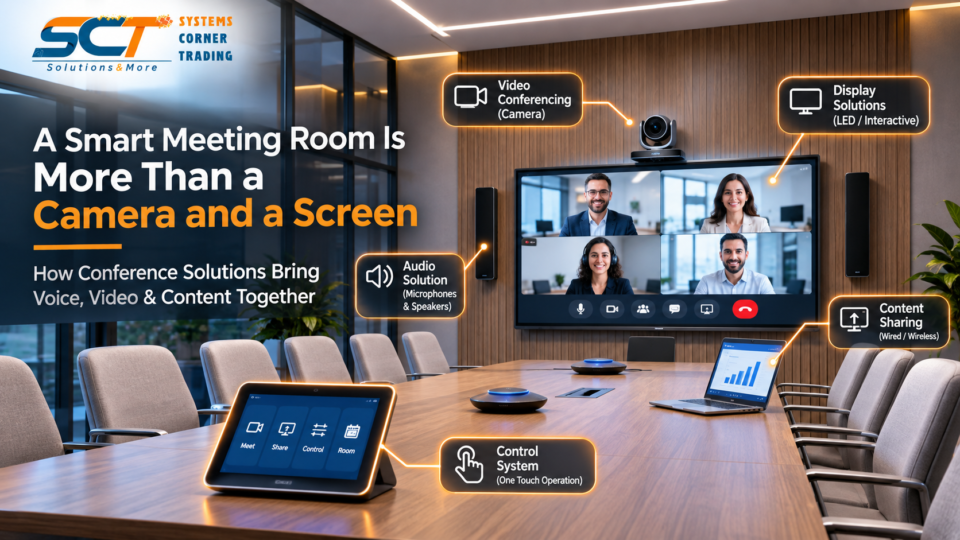
Conference Room Solutions: What Makes a Meeting Room Truly Smart?
November 4, 2026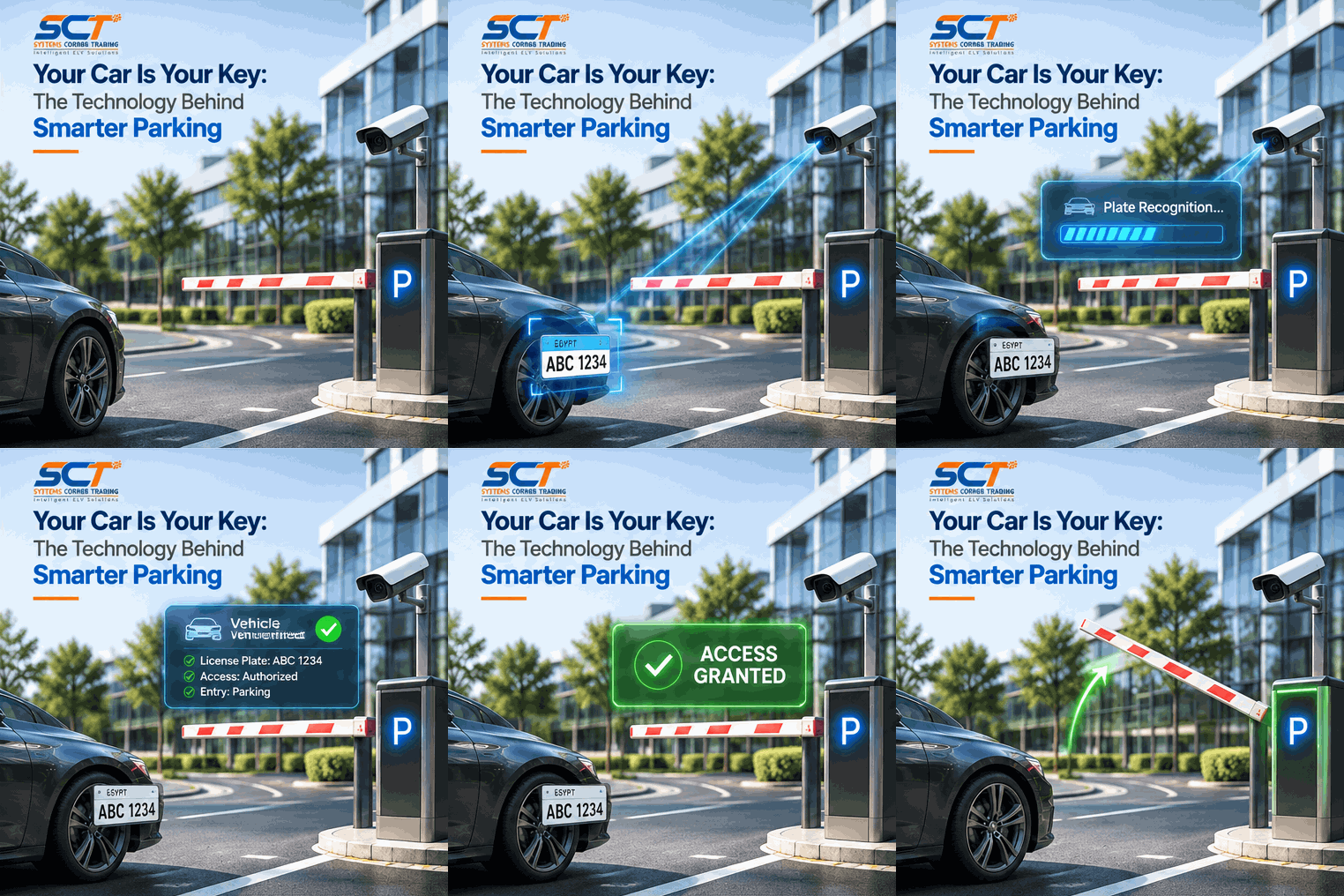
What if entering a building could be as simple as driving up to the gate?
No ticket.
No access card.
No searching for a remote control.
Just your car.
Imagine arriving at your workplace on a busy morning.
You approach the parking entrance.
A camera recognizes your vehicle’s license plate.
The system checks whether your vehicle is authorized.
The barrier opens.
And you drive in.
No buttons. No unnecessary waiting. Just a smarter way to enter.
Behind this seemingly simple moment is a technology transforming how modern buildings manage vehicle access:
License Plate Recognition (LPR).
Your License Plate Is Already an Identifier. What If It Could Also Be Your Key?
Every registered vehicle has a license plate that distinguishes it from others.
Traditionally, parking facilities have relied on access cards, tickets, remote controls, or security personnel to manage entry.
But these methods can introduce unnecessary steps.
Cards can be forgotten.
Tickets can be lost.
Remote controls can be misplaced.
And manual verification can create delays during busy periods.
LPR parking systems offer a different approach.
Instead of requiring drivers to present a separate credential, the system reads a vehicle’s license plate and checks it against predefined access permissions.
The plate becomes a digital access credential.
Of course, recognizing a plate does not automatically guarantee authorization. The system still needs to verify whether that vehicle is permitted to enter.
That’s where intelligent access management begins.
Behind the Gate: What Happens in a Few Moments?
An automated parking entrance may look simple from the outside.
But several connected technologies work together to complete the process.
1. The Camera Captures the Plate
As a vehicle approaches the entrance, a strategically positioned LPR camera captures an image of its license plate.
Camera placement, lighting, vehicle speed, and plate visibility all influence the quality of recognition.
2. Software Reads the Characters
Image-processing and character-recognition technologies identify the license plate and convert the visible characters into digital information.
The result is a plate number the system can process.
3. The System Checks Access Permissions
The recognized plate is compared with an authorized vehicle database.
Depending on the application, permissions might be assigned to employees, residents, registered visitors, or approved service vehicles.
An authorized match can trigger the next step.
An unknown or unauthorized plate can be directed to a configured verification or security process.
4. The Barrier Receives the Command
When the system confirms that access is permitted, the parking controller can send a command to open the barrier.
The exact process depends on the installed equipment and integration design.
5. The Event Is Recorded
Depending on the system configuration, each access event can include information such as the recognized plate, date, time, entry point, and authorization status.
This gives facility teams greater visibility into vehicle movement.
One arrival. Multiple technologies. One connected experience.
Smarter Parking Is About More Than Opening a Barrier
The value of LPR parking systems goes beyond convenience.
For organizations managing vehicle access every day, well-designed automation can support several operational goals.
Faster, More Convenient Entry
Authorized drivers can enter without repeatedly presenting physical credentials.
This can reduce unnecessary interaction at entry points and help improve traffic flow, particularly during busy hours.
Better Control Over Vehicle Access
Facility managers can establish vehicle access permissions based on operational needs.
An employee might have access to a corporate parking area.
A resident might be authorized for a residential compound.
A visitor might receive temporary permission for a scheduled visit.
Access policies can be adapted to the requirements of the facility.
Clearer Entry and Exit Records
When integrated with an appropriate management platform, LPR technology can provide searchable access logs.
These records can help authorized personnel review activity, investigate incidents, and understand traffic patterns.
Integration With Other Security Systems
LPR doesn’t need to operate alone.
Depending on the project’s architecture, it can integrate with:
- Parking barrier and gate controllers
- CCTV and video management systems
- Access control platforms
- Visitor management systems
- Security monitoring and reporting tools
This creates opportunities for more coordinated facility operations.
Less Dependence on Physical Parking Credentials
By using registered vehicle plates as access identifiers, organizations may reduce their reliance on separate cards, tags, tickets, or remote controls for routine entry.
The appropriate solution, however, depends on security requirements and the types of vehicles using the site.
Where Does LPR Parking Make the Biggest Difference?
Consider the different environments where vehicle movement needs to be convenient, organized, and controlled.
Corporate Offices
Help authorized employees and registered visitors enter designated parking areas while maintaining access records.
Residential Compounds
Support convenient resident access and more structured visitor authorization.
Hospitals and Healthcare Facilities
Help manage entry to staff, visitor, and designated parking zones, with appropriate operational controls.
Hotels and Hospitality Properties
Support a smoother parking experience for approved guests, staff, and service vehicles.
Commercial Buildings and Business Parks
Coordinate access across different tenants, buildings, and parking areas.
Warehouses and Industrial Facilities
Support controlled entry for approved vehicles, suppliers, and scheduled deliveries.
Different environments require different access policies.
The important question isn’t simply whether a camera can read a license plate.
It’s whether the entire parking system can support the way the facility operates.
A Smart System Still Needs Smart Planning
LPR technology can simplify vehicle access, but successful implementation requires more than installing a camera.
A reliable project should consider:
Camera Positioning: Selecting suitable installation angles, distances, and lighting conditions for the expected vehicles.
License Plate Compatibility: Ensuring the chosen recognition solution supports the plate formats and languages used in the target market.
Traffic Flow: Planning entry lanes, barriers, vehicle detection, and safety systems around expected traffic volumes.
System Integration: Confirming compatibility between LPR cameras, parking controllers, software, and existing security platforms.
Exception Handling: Establishing a secure process for unreadable plates, unexpected visitors, connectivity failures, and denied access.
Privacy and Data Protection: Defining who can access vehicle records, why the information is collected, and how long it should be retained, in accordance with applicable laws.
And one more consideration matters:
A recognized license plate isn’t always proof of a trustworthy vehicle.
Plate duplication and recognition errors are possible, so higher-security environments may need additional verification measures.
Real intelligence doesn’t mean removing every human decision.
It means automating routine tasks while keeping the right controls in place.
The Future of Parking Isn’t About the Gate
It’s about what happens before the gate opens.
When a vehicle arrives, the building should be able to determine whether access is permitted and respond according to clearly defined rules.
For the driver, the experience should feel simple.
For the facility manager, the process should remain controlled and visible.
For the organization, the technology should fit into a wider security and operational strategy.
That’s what makes a parking system truly smart.
The best technology doesn’t ask people to do more.
It helps them do less — without losing control.
Smarter Vehicle Access Starts With the Right Integration
At Systems Corner Trading (SCT), we understand that a modern parking entrance is more than a barrier and a camera.
It’s part of a connected technology environment.
From parking management and vehicle access solutions to CCTV, access control, and integrated security infrastructure, SCT helps organizations plan technology around their operational requirements.
Whether you’re developing a corporate facility, residential community, healthcare property, hotel, or commercial project, the right vehicle access solution begins with understanding how your site needs to operate.
Your Car Is Your Key. Let’s Make Every Entry Smarter.
Planning a parking management or vehicle access project?
Connect with Systems Corner Trading to discuss the right approach for your facility.
Systems Corner Trading (SCT)
Solutions & More
📞 +966 11 269 4437
📱 +966 51 146 4924
✉️ info@systems-corner.com
🌐 www.systems-corner.com