
Smart Waste Management: How Smart Bins Are Changing Waste Collection
September 30, 2026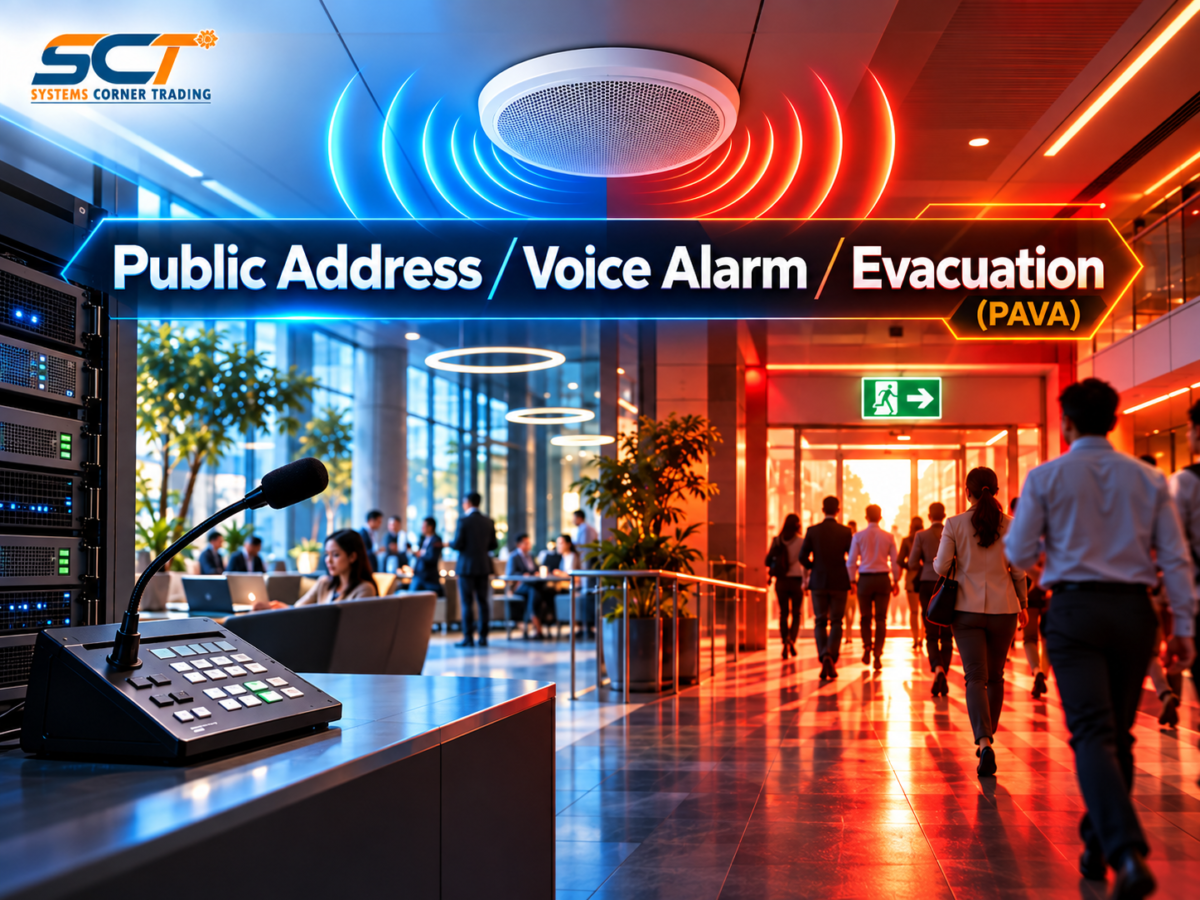
In a busy building, communication matters every day.
Announcements need to reach the right people. Staff may need to be called. Background music may be required in public areas.
But during an emergency, communication becomes something much more important.
People do not only need to hear that something is wrong.
They need to know what to do next.
This is where a Public Address / Voice Alarm / Evacuation System (PAVA) becomes essential.
A properly designed PAVA system combines everyday communication with emergency voice messaging, helping buildings communicate clearly during both normal operation and critical situations.
What Is a PAVA System?
A PAVA system combines Public Address and Voice Alarm functions within one integrated audio infrastructure.
During normal operation, the system can be used for:
- General announcements
- Paging
- Staff communication
- Background music
- Scheduled messages
During an emergency, the same system can switch priority and broadcast clear evacuation or safety instructions.
This gives the system two important roles:
Daily Communication + Emergency Guidance
The objective is not simply to produce sound.
It is to make sure the right message reaches the right area at the right time.
Public Address During Normal Operation
On a normal day, a Public Address system helps organizations communicate efficiently across large facilities.
For example, it can be used to make announcements in:
- Hospitals
- Hotels
- Schools
- Shopping malls
- Offices
- Airports
- Industrial facilities
- Commercial buildings
Messages may be broadcast across the entire building or only to selected areas.
A receptionist may need to make a general announcement.
A hospital may need to call staff to a specific department.
A school may use scheduled announcements.
A hotel may use the system for background music and guest communication.
The same infrastructure can support all these functions.
What Changes During an Emergency?
During an emergency, priorities change.
Background music and routine announcements are no longer important.
Emergency communication must take priority.
A typical sequence may look like this:
Emergency Event Detected
↓
PAVA System Receives the Trigger
↓
Normal Audio Is Overridden
↓
Emergency Message Is Activated
↓
Selected Zones Receive Instructions
↓
Occupants Are Directed to Safety
Instead of hearing only an alarm tone, people can receive a clear voice message explaining what action should be taken.
That difference can be critical in complex buildings.
A Bell Warns. A Voice Guides.
Traditional alarm devices are extremely important because they alert occupants that an emergency condition exists.
But an alarm tone alone cannot always answer questions such as:
Where should I go?
Which exit should I use?
Should everyone evacuate immediately?
Is only one area affected?
Voice evacuation provides an additional layer of communication.
It can give occupants clear, understandable instructions and help reduce uncertainty during an emergency.
An alarm gets attention.
A voice message provides direction.
Not Every Area Needs the Same Message
Large buildings are often divided into different zones.
During everyday operation, zoning allows different announcements or audio to be distributed to different areas.
During emergencies, zoning becomes even more important.
Imagine a large facility with several floors.
An incident occurs on one floor.
Depending on the approved emergency strategy, one zone may receive an immediate evacuation message while another area may receive different instructions.
This approach can support more controlled emergency communication, especially in complex facilities.
The exact sequence always depends on the project’s approved design, emergency procedures and applicable regulations.
Priority Is Everything
A PAVA system must know which message is most important.
Under normal conditions, it may be playing background music.
Then someone makes a paging announcement.
Later, an emergency signal is received.
The emergency message must take priority over lower-priority audio.
A simplified priority structure might be:
Emergency Microphone
↓
Emergency Voice Message
↓
General Paging
↓
Background Music
This helps ensure that critical communication is not interrupted by routine audio.
The Role of the Emergency Microphone
In addition to prerecorded emergency messages, many systems include an emergency microphone.
This allows authorized personnel to make live announcements when required.
For example, security or emergency teams may need to provide updated instructions as a situation develops.
The system therefore supports both:
Pre-recorded messages
and
Live emergency communication
depending on the project requirements.
More Than Just Speakers
A complete PAVA solution involves much more than installing ceiling speakers.
Depending on the system design, the architecture may include:
- Ceiling or wall-mounted speakers
- Horn speakers
- Amplifiers
- Audio controllers
- Paging microphones
- Emergency microphones
- Message storage
- Zone controllers
- Network interfaces
- Equipment racks
- Power supplies
- Backup power
- System monitoring
- Interfaces with other building systems
Each component must work together as part of one reliable communication system.
PAVA and Fire Alarm Integration
One of the most important integrations is between the Fire Alarm System and the Voice Alarm / Evacuation System.
The fire alarm system detects the emergency condition.
The PAVA system communicates the required instructions.
A simplified interaction can be:
Fire Alarm Detects Event
↓
Signal Sent to PAVA
↓
Correct Emergency Scenario Activated
↓
Routine Audio Stops
↓
Voice Message Broadcast to Selected Zones
This creates a coordinated response instead of separate systems operating independently.
Why Voice Clarity Matters
An emergency message is only useful if people can understand it.
That means good PAVA design is not only about speaker quantity or amplifier power.
Engineers also need to consider:
- Speaker location
- Acoustic environment
- Background noise
- Coverage
- Sound level
- Speech intelligibility
- Zone layout
- Building architecture
A message that is loud but unclear may still fail its purpose.
The goal is not simply to hear the system.
The goal is to understand the message.
Where Are PAVA Systems Used?
Public Address and Voice Evacuation systems are valuable in many types of facilities.
Hospitals
Clear communication is especially important because patients, visitors and staff may require different emergency procedures.
Hotels
The system can support daily guest communication while also providing emergency instructions throughout rooms and public areas.
Schools and Universities
PAVA can support daily announcements, scheduled communication and emergency messaging across different buildings or zones.
Shopping Malls
Large public spaces require clear communication across multiple floors and areas.
Airports and Transportation Facilities
Announcements are part of everyday operation, while emergency communication requires reliable priority control.
Commercial Buildings
Office complexes can use one communication infrastructure for normal announcements and emergency guidance.
Industrial Facilities
High background noise and large operational areas can make effective voice communication especially important.
What Makes a Good PAVA Design?
A good system begins with understanding how the building actually operates.
Before selecting equipment, designers should consider:
How many zones are required?
Which areas need separate messages?
What type of speakers are suitable?
What background noise levels are expected?
How will the system integrate with the fire alarm?
Is backup power required?
Which messages need priority?
Are prerecorded and live emergency announcements required?
How will the system be monitored?
These decisions should be made during the design stage.
Not after the equipment has already been selected.
One Infrastructure. Two Critical Roles.
One of the biggest advantages of PAVA is that the communication infrastructure can support both everyday operations and emergencies.
During Normal Operation:
Announcements
Paging
Background Music
Staff Communication
Scheduled Messages
During Emergency Operation:
Priority Override
Voice Alarm
Evacuation Instructions
Zone-Based Messages
Emergency Microphone
This makes PAVA much more than a standard audio system.
It becomes part of the building’s life-safety communication strategy.
Clear Communication Can Change the Response
During an emergency, confusion wastes time.
A person who hears an alarm knows something is happening.
A person who hears a clear instruction also knows what to do.
That is the real value of voice evacuation.
Alert people.
Guide people.
Communicate clearly.
Because when every second matters, every word matters too.
Clear Communication. When It Matters Most.
At Systems Corner Trading (SCT), we provide integrated Public Address, Voice Alarm and Voice Evacuation solutions designed for modern facilities.
Our solutions can support:
✔ Public Address
✔ General Paging
✔ Background Music
✔ Voice Alarm
✔ Voice Evacuation
✔ Emergency Microphones
✔ Zone-Based Communication
✔ Fire Alarm Integration
✔ Audio Controllers & Amplifiers
✔ System Testing & Configuration
From everyday announcements to emergency communication, the goal is simple:
Make sure the right message reaches the right people at the right time.
Systems Corner Trading (SCT)
Solutions & More
📞 +966 11 269 4437
📱 +966 51 146 4924
📧 info@systems-corner.com
🌐 www.systems-corner.com