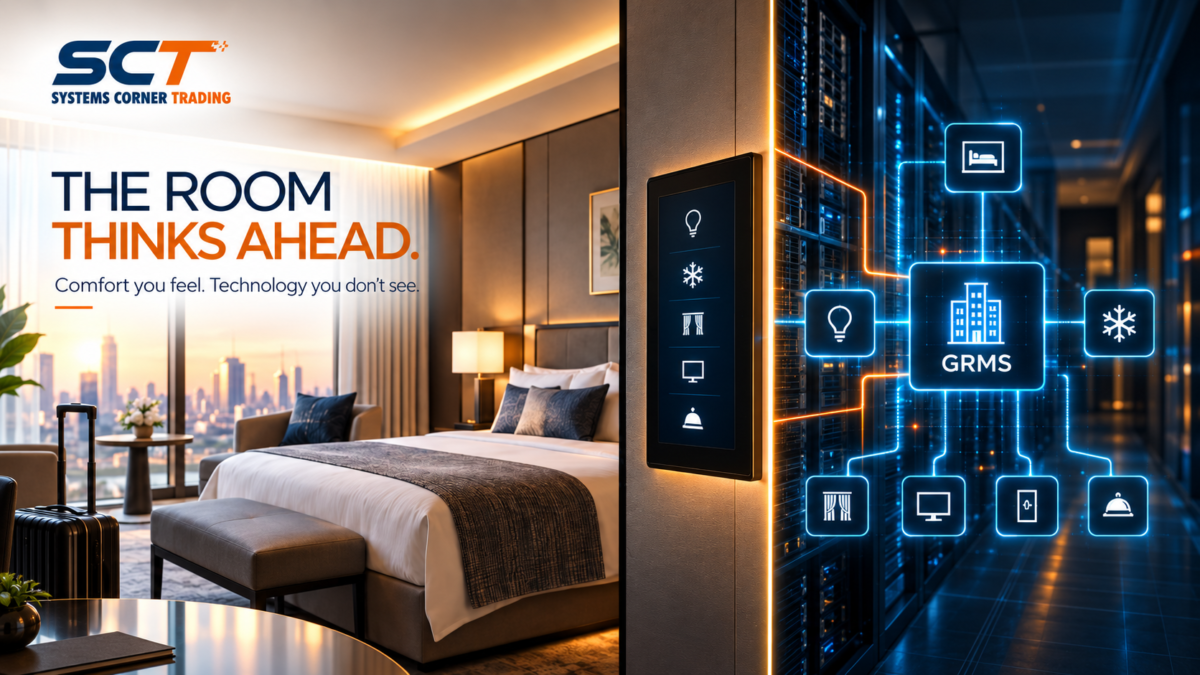

Guest Room Management System (GRMS): How Smart Hotel Rooms Really Work
September 23, 2026
Public Address / Voice Alarm / Evacuation (PAVA): Clear Communication When It Matters Most
October 7, 2026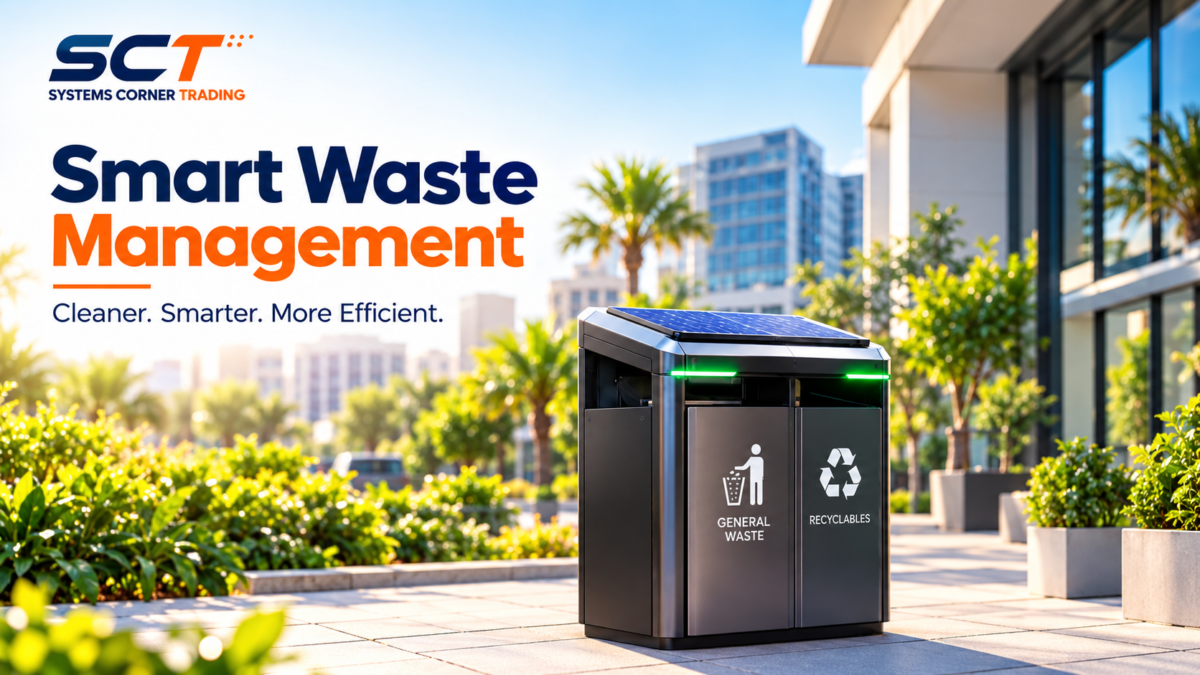
A waste bin seems simple.
Waste goes in.
The bin fills up.
A collection team empties it.
But there is one problem:
How does anyone know when the bin actually needs to be collected?
Traditional waste collection often depends on fixed schedules or manual inspection. A truck may arrive while a bin is still almost empty — while another location may already require attention.
Smart Waste Management changes this approach by turning the waste bin into a connected source of information.
Instead of simply holding waste, a smart bin can monitor its condition, communicate with a management platform and help operators make better collection decisions.
At Systems Corner Trading (SCT), Smart Bin solutions combine connected waste containers with technologies such as fill-level measurement, IoT sensors, solar power, compaction and centralized monitoring. Systems Corner
What Is a Smart Bin?
A Smart Bin is a technologically enhanced waste container designed to make waste collection more efficient.
Depending on the solution, it can include:
- Fill-level monitoring
- IoT sensors
- Intelligent compaction
- Solar-powered operation
- LED status indicators
- Cloud-based monitoring
- Secure waste disposal
- Integration with existing management platforms
The objective is not simply to make the bin more advanced.
It is to make waste collection more informed.
SCT’s Smart Bin solution includes cloud-connected containers with fullness measurement, sensors, solar panels and intelligent compaction technology. Systems Corner
From Waste Bin to Data Point
The idea becomes much easier to understand when we follow the process.
1. Waste Enters the Bin
The container operates normally from the user’s perspective.
Waste is deposited just like with a conventional bin.
But inside, the system can monitor what is happening.
2. The Fill Level Is Measured
Instead of waiting for someone to physically inspect the container, the system can measure how full it is.
For example:
20% → Plenty of capacity
60% → Filling
90% → Collection may soon be required
Now the facility team has useful information instead of assumptions.
3. The Bin Sends Information
Through connected IoT technology, bin status can be transmitted to a monitoring platform.
Instead of asking:
“Which bins should we check today?”
operators can have better visibility of the waste containers in their network.
4. The Platform Helps Prioritize Collection
This is where the real value begins.
Imagine managing dozens or hundreds of waste bins.
Some may be almost empty.
Some may be half full.
Others may require immediate attention.
A centralized platform can make those differences visible.
The collection process can then become more focused on actual demand rather than simply following the same routine every day.
SCT’s listed Smart Bin capabilities include a platform for control and monitoring, along with integration into existing platforms. Systems Corner
Why Add a Compactor?
One of the most interesting Smart Bin technologies is the integrated press compactor.
A traditional container has a fixed physical volume.
Once that volume is occupied, the bin needs attention.
A compactor can compress the waste inside the container, increasing the useful capacity before collection is required.
That means the system is not only monitoring the bin.
It can also help the bin use its available space more effectively.
SCT specifically lists an intelligent press compactor as part of its Smart Bin solution. Systems Corner
Why Solar Power?
Smart infrastructure needs power.
But installing electrical connections for every outdoor waste container is not always practical.
Solar-powered operation provides another option.
A solar panel can support the electronic functions of the Smart Bin while allowing the unit to operate as part of an outdoor connected environment.
This is particularly useful for modern urban and public-space applications.
SCT’s Smart Bin solution lists solar-panel operation among its features. Systems Corner
Traditional Collection vs Smart Collection
The difference can be summarized very simply.
Traditional Approach
Fixed Route
↓
Visit Every Location
↓
Check Every Bin
↓
Collect Waste
Smart Approach
Monitor Bin Status
↓
Identify Actual Need
↓
Prioritize Locations
↓
Plan Collection More Efficiently
The important difference is:
Data comes before the collection decision.
The Benefits of Smart Waste Management
Better Visibility
Operators can understand the status of connected waste containers without relying only on physical inspection.
More Efficient Collection
Knowing which bins actually require attention can support more efficient planning.
Reduced Operating Costs
Better visibility and smarter collection strategies can help reduce unnecessary operational activity. SCT also identifies operating-cost reduction as one of the solution’s advantages. Systems Corner
Improved Waste Separation
Connected solutions can also support separate collection approaches for waste and recyclable materials. Systems Corner
Cleaner Environments
When operators have better information about container status, they can respond more effectively before waste-management problems become visible to users.
Integration
A Smart Waste Management solution does not necessarily have to operate as an isolated system.
SCT’s solution can integrate with existing platforms, allowing waste-management data to become part of a wider smart infrastructure environment. Systems Corner
Why This Matters for Smart Cities
A smart city is not created only by cameras, networks and intelligent buildings.
It is created when everyday infrastructure starts providing useful information.
Lighting can become connected.
Parking can become connected.
Buildings can become connected.
And even waste containers can become connected.
The technology may seem simple, but the principle is powerful:
Measure what is happening.
Share the information.
Respond when action is actually needed.
That is the foundation of smarter operations.
The Smartest Technology Is Often the Technology You Don’t Notice
Most people will never think about the sensors inside a waste container.
They will not see the cloud platform.
They will not think about collection optimization or IoT connectivity.
They will simply notice something else:
A cleaner, better-managed environment.
And that is exactly what good smart infrastructure should achieve.
Technology should not create complexity for the people using the space.
It should quietly help the environment work better.
From Waste Collection to Waste Intelligence
Smart Waste Management represents a simple shift:
From asking:
“When is the next scheduled collection?”
to asking:
“Which containers actually need attention?”
That difference turns waste collection from a routine activity into a more data-driven operation.
A bin is no longer simply a container.
It becomes part of the connected infrastructure.
Smarter Waste. Smarter Operations.
At Systems Corner Trading (SCT), we provide Smart Bin solutions designed to support more efficient and connected waste-management environments.
Our solutions can incorporate:
✔ IoT Sensors
✔ Fill-Level Monitoring
✔ Intelligent Compaction
✔ Solar-Powered Operation
✔ LED Indicators
✔ Cloud Monitoring
✔ Platform Integration
✔ Secure Waste Disposal
Whether the objective is improved monitoring, optimized collection or smarter infrastructure, connected waste-management technology can help organizations move toward cleaner and more efficient operations. Systems Corner
Cleaner. Smarter. More Efficient.
Systems Corner Trading (SCT)
Solutions & More
📞 +966 11 269 4437
📱 +966 51 146 4924
📧 info@systems-corner.com
🌐 www.systems-corner.com